
Plenty of Bastrop County homes are not on city sewer at all. They run on an aerobic septic system in the backyard, and that one fact changes who you call when something goes wrong, what maintenance you owe by law, and what a backup actually means. If you just bought a place out past the city limits, the first useful question is not which is better. It is which one you have, and who handles what when it fails.
Here is a plain comparison of aerobic septic vs city sewer for Central Texas homeowners, written from the plumbing side, with a clear line on where a plumber’s work ends and a licensed septic professional’s begins. You are far from alone on septic: the U.S. EPA says more than one in five U.S. households depend on individual septic or small cluster systems.
The difference comes down to who treats the waste
The difference between aerobic septic and city sewer is where your wastewater gets treated and who is responsible for it. With city sewer, your home is connected to the municipal sewer system and the waste flows to a centralized wastewater treatment plant the utility runs and maintains. With an aerobic septic system, the treatment happens on your property in a system you own, and keeping it working is your responsibility. City sewer is a monthly bill and little upkeep. Septic means no monthly sewer fee, but real, ongoing maintenance that Texas requires you to keep up.
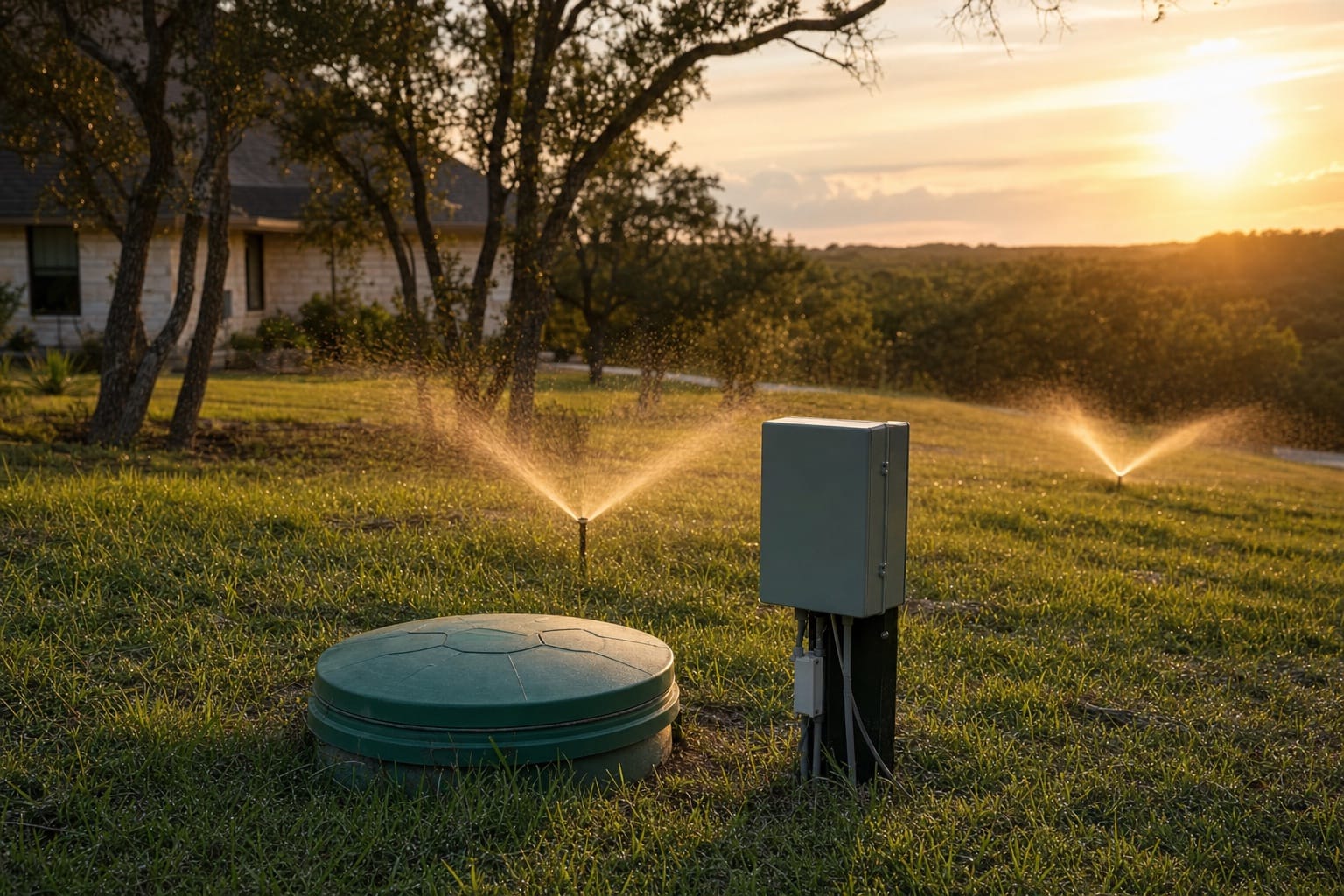
How an aerobic septic system works
An aerobic septic system is essentially a small wastewater treatment plant in your yard. Where a conventional septic tank treats waste passively, an aerobic treatment unit uses oxygen to break down the waste and settle out the solids, as Texas A&M AgriLife Extension describes it. Air is pumped into the treatment chamber so oxygen-loving bacteria do the work faster and more completely, which is why these systems need electricity and moving parts that wear.
After treatment, the effluent is disinfected, moves to a pump tank, and is usually dispersed through a spray field, the sprinkler-looking heads you may have seen running in a rural yard. Because an aerobic system has powered components, it needs more attention than a passive tank. The EPA notes that systems with pumps, float switches, or other mechanical parts should be inspected more often than conventional systems and that a service contract matters for exactly that reason.
City sewer and conventional septic for contrast
City sewer carries waste away through municipal lines to a centralized treatment plant. The public main and the plant are the utility’s job. The building sewer, the pipe that runs from your house to the connection, is generally yours. Exactly where your responsibility stops depends on the utility, and the Insurance Information Institute notes that in some places the owner’s responsibility for the lateral extends into the street or public right of way. If your city has a published rule, it is worth knowing before the first backup.
Some older Central Texas homes run on a conventional septic tank rather than an aerobic system. Conventional systems are passive: a tank and a drain field with no aerator or spray heads. Either way, septic keeps wastewater on your property instead of sending it to a public plant. The EPA says the average household system should be inspected at least every three years and that household tanks are typically pumped every three to five years. Aerobic units, with their electrical and mechanical parts, are checked far more often under Texas rules.
How to tell which one your Bastrop home has
You can usually tell which system you have with a few quick checks. Look for these signs:
- A monthly sewer charge on your utility bill means you are on city sewer. No sewer line item points to septic.
- Spray heads or a control panel with an alarm in the yard indicate an aerobic septic system.
- A buried tank lid and a drain field with no spray heads suggest a conventional septic tank.
- County permit records. Bastrop County permits on-site sewage facilities, so the county can tell you what was permitted at your address.
- Location. Inside the city limits usually means sewer; unincorporated county land often means septic.
Who handles what when something goes wrong
The system you have decides who you call. On city sewer, a backup is most often in the building sewer on your property, which is plumbing work. We camera the line, clear it, and repair the breach, and if the trouble is past the connection, the city handles its main. On an aerobic septic system, a backup could be in the house plumbing, the building sewer running to the tank, or the septic system itself, and only the first two are a plumber’s job.
Here is the honest scope line. Savior Service Plumbing Company handles the house plumbing and the line from the house to the tank or the main, using the same sewer line repair and drain cleaning we do on any home. We do not pump, install, or service septic systems or aerobic units. The tank, aerator, pump, control panel, and spray field belong to your maintenance provider or a licensed septic professional. In Texas, septic installers and maintenance providers are licensed through TCEQ, separately from plumbers, which is a good reason to keep the two jobs straight.
| Question | Aerobic septic | City sewer |
|---|---|---|
| Where waste is treated | On your property | Municipal plant |
| What you own and maintain | The house plumbing, the line to the tank, and the whole septic system | The house plumbing and the building sewer to the connection |
| Ongoing cost | Maintenance contract or approved self-maintenance, power, parts | Monthly utility fee |
| Who fixes a backup | Plumber for the house and line, septic professional for the system | Plumber for your line, the city for its main |
Signs the problem is on the septic side
Some symptoms point straight at the septic system rather than the plumbing. An alarm light or buzzer on the aerobic control panel is the clearest one, and it is a call to your maintenance provider. So are spray heads that run constantly or never run, a strong odor at the tank or spray area, and soggy ground or standing water over the spray field when it has not rained.
Other symptoms point at the plumbing. One slow fixture, a clog that clears and returns in the same drain, or a backup with the control panel quiet usually means the house plumbing or the line to the tank. When it is not obvious, a camera inspection of the line settles it. If the line is clear all the way to the tank inlet, the problem is downstream and belongs to the septic professional. If the camera finds a clog, a belly, roots, or a broken section on the way, that is ours to fix.
What a plumber does on a septic home
A good plumber protects a septic system from the house side. Everything that runs down your drains ends up in the tank, so leaks inside the house become a septic problem. The EPA notes that a single leaky or running toilet can add as much as 200 gallons of water a day, and that efficient water use improves how a septic system operates and lowers the risk of failure. Fixing running toilets, dripping fixtures, and failing fill valves is plumbing work that pays off twice on a septic home.
The line between the house and the tank matters just as much. It needs proper slope, a working cleanout, and sound joints, because a sagging or root-filled section can back up the house even when the septic system is fine. Shifting soil plays a part here too, and we explain how Bastrop’s clay and sand soil affects buried lines in a separate guide. If you are in or around town, our Bastrop plumbing team can tell you plainly which side of the line a problem falls on.
Maintenance and the rules you actually owe
With an aerobic system, ongoing maintenance is a legal requirement, not a suggestion. Under the Texas Commission on Environmental Quality rules, the maintenance provider must submit a report at least once every four months, and Bastrop County requires a mandatory two-year initial maintenance contract with a licensed maintenance provider when a new aerobic system is installed. After that, the county allows homeowners to maintain their own aerobic systems with approved training, or you can keep a provider under contract. Maintenance is required for the life of the system.
That upkeep is cheap next to the alternative. The EPA points out that routine maintenance costs far less than repairing or replacing a failed system. It is also about water quality: the EPA warns that insufficiently treated sewage can contaminate groundwater, so staying on top of an aerobic unit protects more than your yard. Do not flush anything but human waste and toilet paper, keep grease out of the sink, and go easy on the garbage disposal, because all of it ends up in the tank.
Know your system before you need a plumber
Aerobic septic and city sewer are not better or worse, they are different responsibilities. The system you have tells you what maintenance you owe and who to call when something fails. If your house plumbing or the line running out to the tank or the main is backing up anywhere in Bastrop County, that part is ours. Our licensed plumbers can camera the line through our sewer and drain services, give you a free written estimate, and tell you plainly whether the fix is on the plumbing side or belongs with your septic professional.
Septic and sewer questions
Straight answers to the questions homeowners ask us about aerobic septic and city sewer.
How do I know if I have septic or city sewer?
Check your utility bill first. A monthly sewer charge means city sewer, and no sewer line item points to septic. In the yard, spray heads and a control panel with an alarm mean an aerobic septic system, while a buried tank lid and drain field suggest a conventional tank. Bastrop County permit records can confirm what was permitted at your address.
Who do I call if my septic system backs up?
It depends on where the problem is. If the house plumbing or the line from the house to the tank is clogged or broken, that is a plumber's job. If the control panel alarm is on or the tank, aerator, pump, or spray field is the issue, call your maintenance provider or a licensed septic professional. A camera inspection of the line shows which side you are on.
Does Texas require aerobic septic maintenance?
Yes. Under TCEQ rules, the maintenance provider for an aerobic treatment unit must submit a report at least once every four months. Bastrop County also requires a two-year initial maintenance contract with a licensed provider on a new aerobic system. After that, homeowners can keep a contract or maintain the system themselves with approved training, and maintenance is required for the life of the system.
Can you convert from aerobic septic to city sewer?
Only where a public sewer connection is actually available at your property, which many rural Bastrop County addresses do not have. Where a connection exists, conversion usually involves the utility's permit and tap requirements, a new building sewer to the connection, and properly abandoning the old septic system under state rules. Ask your city or utility what applies to your address first.
Does Savior Service Plumbing Company service aerobic septic systems?
No. Savior Service Plumbing Company handles the house plumbing and the sewer line from the house to the tank, including camera inspections, clearing clogs, and line repairs. We do not pump, install, or service septic tanks or aerobic units. For the aerator, control panel, alarms, or spray field, call your maintenance provider or a licensed septic professional.