
When a drain clogs once, snaking it is usually the answer. When the same drain clogs again a month later, the tool is not the question anymore. The real question is what is happening inside the pipe, and that is where the choice between hydro jetting vs cabling actually gets made. Cabling punches a hole through a clog and restores flow. Hydro jetting scours the pipe walls clean. They solve different problems, and a good plumber picks based on the cause, not the calendar.
This is a master plumber’s decision tree for recurring clogs: how each method works, when cabling is enough, when the pipe needs hydro jetting, and the one situation where jetting is the wrong call.
Cabling restores flow, hydro jetting restores the pipe
Cabling restores flow and hydro jetting restores the pipe. Drain cabling, also called drain snaking, runs a flexible metal cable down the line and bores through the clog so water moves again. Hydro jetting sends high pressure water through a nozzle that scours grease, scale, and roots off the pipe walls all the way around. Cabling is the right first move for a simple clog. Hydro jetting is what you reach for when buildup keeps coming back, because it removes the material the next clog would have formed on.
How drain cabling works and what it is best at
Drain cabling works by feeding a flexible metal cable into the line, with a cutting or grabbing head that breaks up or hooks the clog. It is fast, affordable, and the right tool for isolated, soft blockages: a hair clog in a shower drain, a single slow sink, a wad of paper in a toilet line. For most one-off clogs, a cable clears the drain in one visit and nothing more is needed.
The limit of cabling is that it punches a hole through the blockage rather than cleaning the pipe. A cable can open a channel through a grease layer or a root mass and get water flowing, but it leaves most of that buildup stuck to the pipe walls. That is why a snaked line can clog again: the opening closes back up as the remaining grease and debris catch new material.
How hydro jetting works and when the pipe needs it
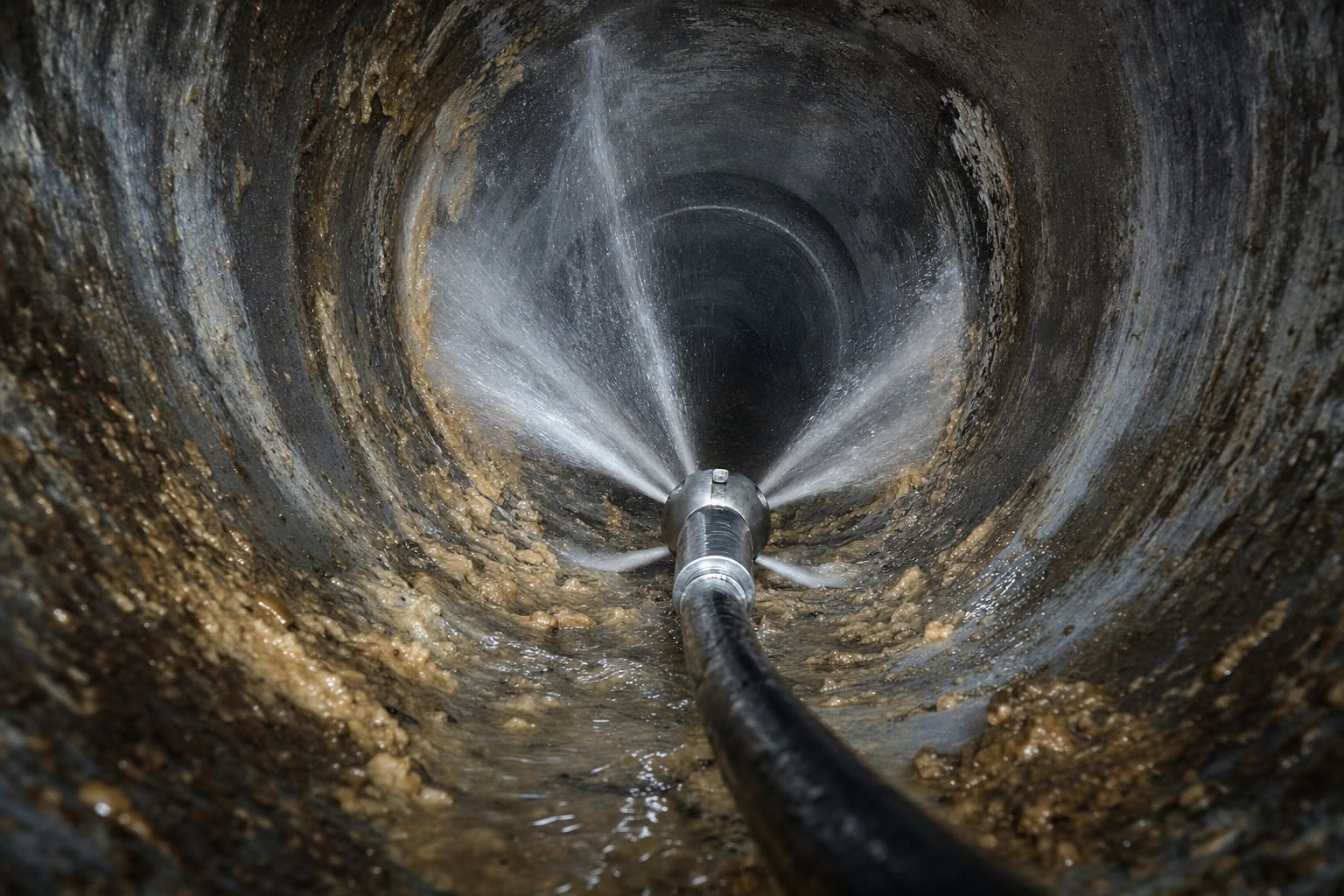
Hydro jetting clears a line with high pressure water instead of a blade. A jetter pushes water through a specialized nozzle, and the forward jets cut through the blockage while rear-facing jets drive the nozzle ahead, scour the pipe walls, and flush everything downstream. Professional sewer jetters are commonly rated in the 3,000 to 4,000 PSI range (US Jetting equipment specifications), and a careful operator matches the nozzle, pressure, and flow to the pipe in front of them rather than running every line at full power.
Jetting earns its keep on the clogs a cable cannot finish. Heavy grease in a kitchen line, scale in a hard-water home, and recurring main-line stoppages all call for a jetter. Tree roots are the big one: the U.S. EPA lists roots entering through defects or openings in a sewer line as a cause of blockages, and on a root-fed line, cutting the roots and then jetting the wall gives a far cleaner result than a cable alone. For that kind of work, professional hydro jetting and sewer cleaning is the tool that actually resets the pipe.
The decision tree for a recurring clog
The right method comes from four questions, not from a price list. A master plumber runs through them before deciding between hydro jetting vs cabling, and a camera inspection answers the ones you cannot see.
- One fixture or the whole house? A single slow drain is usually local and cable-friendly. Multiple fixtures backing up points to the main line.
- First time or recurring? A first-time clog often just needs a cable. A clog that keeps returning is buildup or roots a cable will not remove.
- What is the cause on camera? Soft blockage and paper favor cabling. Grease, scale, and roots favor jetting.
- What is the pipe? Sound modern pipe takes jetting well. Old, fragile pipe may not, which moves the decision toward repair.
| Your situation | Likely method |
|---|---|
| One fixture, first-time, soft clog | Cabling |
| Multiple fixtures or main-line backup | Hydro jetting, after a camera check |
| Recurring grease or hard-water scale | Hydro jetting |
| Tree roots in the line | Root cutting, then hydro jetting |
| Old or fragile pipe on camera | Neither, look at repair first |
Kitchen lines, laundry lines, and the main line clog differently
Where the clog sits tells you a lot about which method fits. A kitchen line clogs on grease and food solids that coat the horizontal run under the floor or slab. A cable opens it, but the coating stays, which is why kitchen lines are the most common repeat offenders and the most common candidates for jetting. Bathroom sinks and showers clog on hair and soap scum close to the fixture, and a cable or even a hand tool usually finishes the job.
Laundry lines are their own case. A washing machine dumps a large volume of water fast, so a partial restriction that would go unnoticed under a sink shows up as water overflowing the standpipe. Lint and soap residue build slowly, and a line that keeps overflowing mid-cycle usually needs more than a pass with a cable. The main line carries everything from the house, so a main-line clog shows up at the lowest drains first, often a tub or shower, and it is where roots, wipes, and years of buildup meet. That is the line where a camera pays for itself.
Why a cleanout decides how well either method works
A cleanout is a capped access fitting on the drain line, usually near the foundation outside, and it gives a cable or jetter hose a straight shot into the main. With a good cleanout, either method works the way it should. Without one, the plumber has to go in through a roof vent or pull a toilet, which limits what equipment can reach the clog and adds work to every visit.
Plenty of older Central Texas homes either never had an exterior cleanout or have one buried under a flower bed. If your line clogs more than once, adding a proper cleanout is often the most useful upgrade you can make, because it makes every future cleaning and camera inspection faster and more thorough. We check for access on the first visit and tell you plainly whether one makes sense.
When jetting is the wrong call
Hydro jetting is not always the answer, and on older or fragile pipes it can be the wrong one. The same high pressure water that scours a sound line can damage pipe that is already cracked, corroded, or thin. Buried cast iron, which the InterNACHI life expectancy chart puts at 50 to 60 years, is exactly the kind of pipe that needs a look before it gets jetted. The same goes for the old galvanized drains that keep clogging in many older homes, where the pipe wall itself may be rusted thin.
This is why we run a camera first on any older home. If the line is sound, jetting is safe and effective. If the camera shows a pipe near the end of its life, the honest answer is not a more aggressive cleaning. It is a conversation about repair, because forcing high pressure water through a failing pipe trades a clog today for a bigger repair tomorrow. No upsell, no guesswork, just what the pipe can take.
What it costs and why a camera inspection comes first
Cabling is the cheaper single visit and hydro jetting costs more up front, but the smarter comparison is over time. If a line gets cabled every few months because the underlying grease or roots never get removed, those repeat visits can add up past what one jetting and a camera inspection would have cost. Clearing the symptom on a schedule is rarely cheaper than fixing the cause once.
A camera inspection is what makes that call honest. Seeing the cause and the pipe condition is the difference between a recommendation you can trust and a guess you pay for. Every job gets a free written estimate after an on-site assessment, so the price reflects what the line actually needs.
Keeping the line clear after it is cleaned
Once a line is clean, a few habits keep future clogs away. Keep fats, oils, and grease out of the kitchen drain, since grease is what rebuilds on the pipe walls fastest. Use strainers on shower drains to catch hair. Flush only toilet paper, because wipes marketed as flushable do not break down the way paper does. On a home with known tree roots near the sewer line, a periodic camera check catches new growth while it is small.
Hard water adds to the problem. The USGS classifies water above 180 mg/L as very hard, and groundwater that moves through limestone, like the aquifers under much of Central Texas, picks up the calcium and magnesium that leave scale behind. In a hard-water home, scale builds on pipe walls over the years and gives grease and debris something to grab. That is one more reason a recurring clog here is worth a camera look rather than another round of cabling.
Stop clearing the same clog twice
A clog that keeps coming back is a diagnosis problem, not a tool problem. Cabling clears a path, hydro jetting cleans the pipe, and a camera tells you which one your line needs and whether the pipe can take it. If you are tired of snaking the same drain in Bastrop or anywhere across Greater Austin, our licensed plumbers can look inside the line through our sewer and drain services and recommend the fix that actually holds, with a free written estimate before any work starts.
Hydro jetting questions
Straight answers to the questions homeowners ask us about hydro jetting and drain cabling.
Is hydro jetting better than snaking?
Neither is better across the board, because they solve different problems. Cabling, or snaking, is the right tool for an isolated soft clog and costs less for a single visit. Hydro jetting is better for grease, scale, and roots because it cleans the full pipe wall. The cause of the clog and the condition of the pipe decide which one fits.
Can hydro jetting damage old pipes?
It can, on pipe that is already cracked, corroded, or thin. The same high pressure water that safely scours a sound line can make damage worse in old cast iron or rusted galvanized drains. That is why we run a camera before jetting in any older home, to confirm the pipe can take the pressure before the jetter goes in.
Why does my drain keep clogging after snaking?
Because snaking bores a hole through the clog but leaves buildup on the pipe walls. Grease, scale, or root hairs the cable could not remove catch new debris, and the opening closes back up. A drain that clogs again within weeks or months usually needs a camera inspection to find the cause, and often hydro jetting to remove it.
How often should a sewer line be cleaned?
It depends on the home. A line with no history of trouble may never need routine cleaning. A home with mature trees near the sewer line, a history of kitchen grease clogs, or heavy hard-water scale benefits from a periodic camera check, so buildup or roots get caught while they are small instead of after a backup.
Do I need a cleanout for hydro jetting?
A cleanout is not strictly required, but it makes jetting and camera work far more effective because it gives the hose a straight path into the main line. Without one, the plumber has to work through a roof vent or a pulled toilet, which limits the equipment. Adding an exterior cleanout is a common upgrade on older homes with recurring clogs.