
The best freeze prep for a Smithville home happens in November, not the night the forecast turns. Before the first hard freeze, find and test your main shutoff, protect every pipe that sits outside the heated part of the house, drain what you can, and know exactly what to do if something splits anyway. That is about an hour of work for most homes, and it is the cheapest plumbing work you will do all year.
Smithville has its own reasons to take this seriously. A lot of the housing here is older, plenty of it sits up on piers with plumbing running through an open crawlspace, and the low ground along the Colorado River can run colder than the forecast for the region. When a winter storm brings ice and several days below freezing, those details decide which pipes make it. Here is the checklist we would walk through on a Smithville house, in the order we would do it.
Why Smithville homes need their own freeze plan
Smithville homes need a freeze plan built around older construction and exposed plumbing, not a generic list written for new slab houses. The town grew up as a railroad hub. The Texas State Historical Association notes the Missouri, Kansas and Texas railroad put its central shops here in 1894 and the town incorporated the next year, so the blocks around downtown hold houses from many different eras of building.
That mix matters for pipes. Many older homes here sit on pier-and-beam foundations, which means the water lines run through a crawlspace that is open to outside air. Add-ons and remodels often route new pipe along exterior walls or through unheated porches. Low spots near the river and creek bottoms also tend to hold cold air on still, clear nights, so a reading a few degrees below the forecast is common. That is the kind of local detail a Smithville plumber who knows older pier-and-beam homes checks first. The pipe that freezes is almost never the one in the middle of the house. It is the one in the crawlspace, the garage, the attic, or the outside wall.
Find and test your main shutoff first
The single most important freeze prep step is knowing where your main water shutoff is and confirming it actually closes. If a pipe splits, every minute the water runs adds to the damage, and a shutoff you cannot find or cannot turn is no help at 2 AM.
Most homes have two places to stop the water: a valve where the line enters the house and the valve at the meter box near the street. Find both, and clear away anything that makes them hard to reach. Turn the house valve off and on once now, while nothing is wrong. Old gate valves with round handles are known to seize or break after years of sitting open, and a valve that fails during a test is a cheap fix in November and an expensive one in February. If yours is stuck, we can replace it with a quarter-turn ball valve before the cold sets in.
Keep a meter key where you can find it in the dark, and make sure everyone in the house knows where the shutoff is.
The outdoor walk-around checklist
Outdoor plumbing is the most exposed part of any home, so start your checklist outside. Texas A&M AgriLife Extension warns that water pipes can freeze and burst once the outside temperature reaches 20 degrees or below, and the lines most at risk are outdoor faucets, pool supply lines, sprinkler lines, and pipes in crawlspaces, attics, and garages.
- Disconnect every garden hose and drain it. A connected hose traps water at the faucet, which is the most common way an outdoor faucet bursts behind the wall. We covered that failure in detail in why frost-free outdoor faucets still split.
- Cover each outdoor faucet with an insulated cover.
- Drain the irrigation system and shut it off, following the installer’s directions.
- Wrap the irrigation backflow assembly. These brass devices usually sit above ground, fully exposed, and their bodies and test cocks crack when they freeze full of water.
- Insulate any exposed pipe at the water heater closet, the well house, or the line that feeds a shop or barn.
One thing not to do: do not pour antifreeze into sprinkler or pool lines. AgriLife specifically advises against it because it is harmful to people, pets, and plants. If you are on a private well outside town, protect the exposed piping at the pressure tank too. The well pump itself is a job for your well company.
Crawlspaces and pier-and-beam houses in Smithville
In a pier-and-beam house, the crawlspace is where Smithville pipes are most likely to freeze, so it deserves the most attention. Cold wind moves freely under a raised floor, and the supply lines hanging there sit in nearly outdoor conditions on a hard freeze night.
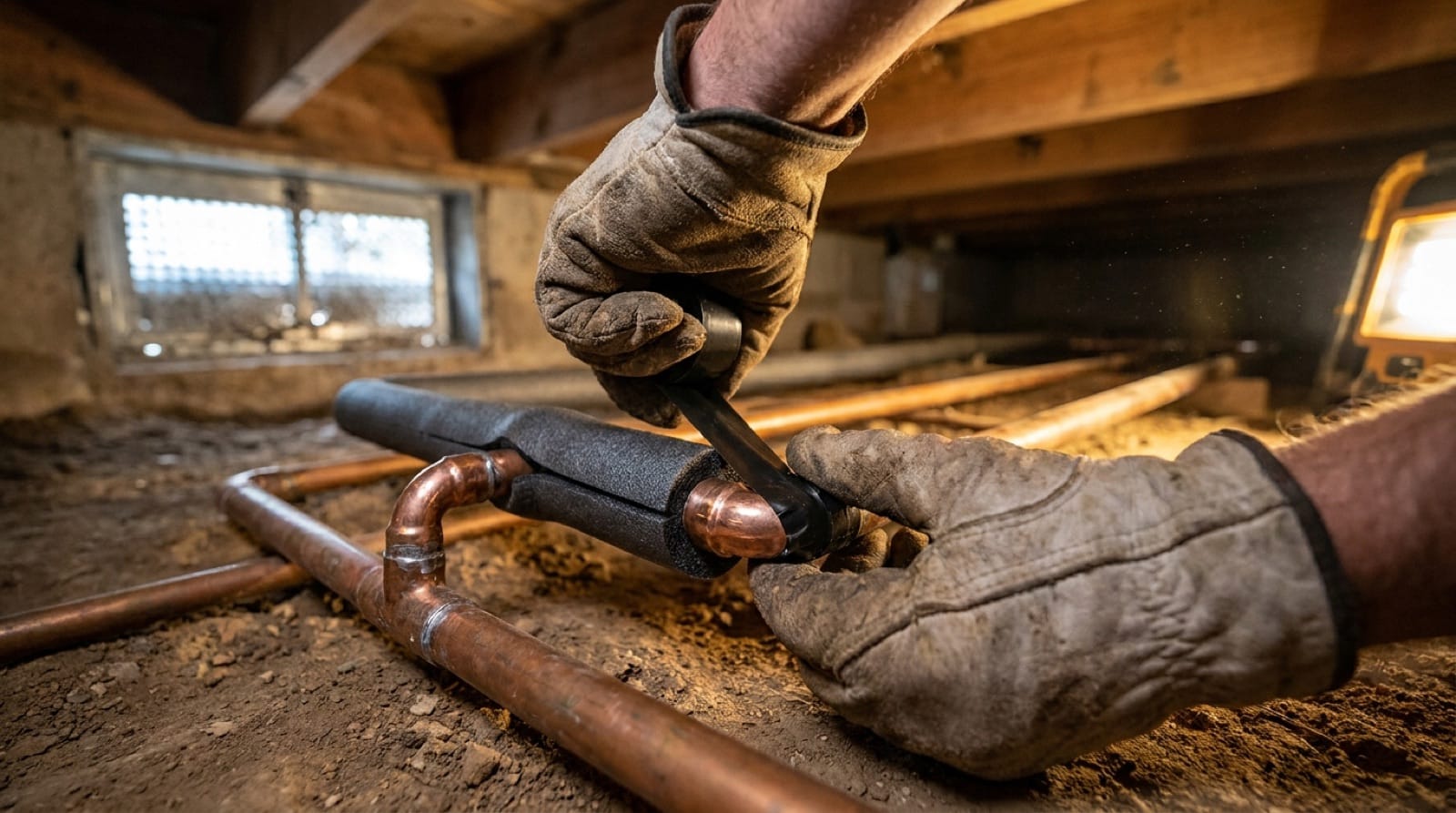
Start by looking at what is down there. Bare copper or plastic lines should get foam pipe sleeves, with the seams taped and the elbows covered. Lines on the north and west sides of the house freeze first, because that is where winter wind hits. Check the skirting for gaps, broken vent covers, and missing access panels, because closing those openings for the winter keeps the coldest air off the pipes. Open the vents again in spring so the crawlspace can dry out.
For runs that froze in a past winter, AgriLife suggests UL-listed heat cable as an option alongside insulation. Install it exactly as the manufacturer directs and plug it into a protected outlet. While you are under there, look for old drips, stained subfloor, or patched sections of pipe. A crawlspace that already shows water damage is telling you which line is weak. Older homes sometimes still have galvanized steel or mixed materials joined in odd ways, and those transitions are where we often find the first leak after a freeze.
Attics, garages, and exterior walls
After the crawlspace, the next most vulnerable spots are pipes in the attic, the garage, and any wall that faces the weather. The Texas Department of Insurance recommends wrapping indoor pipes in unheated areas and turning off the water to a clothes washer that sits in an unheated garage.
Go through the house with that in mind. A water heater in the garage has supply lines and a drain valve that sit in cold air, so insulate the exposed pipe and keep the garage door closed during a freeze. Kitchen and bathroom sinks on exterior walls get cold inside the cabinet, which is why opening those cabinet doors on a freezing night helps. Converted porches and additions deserve a look, because plumbing added later is often run wherever it was easiest, which is not always where it stays warm.
Tankless heaters and anything that needs power
A tankless water heater protects itself from freezing only while it has electricity. Most units, including gas models, use small electric heaters inside the cabinet to keep their internal water passages above freezing, and they cannot do that during a power outage. Check your owner’s manual now for the steps to drain the unit if the power goes out during a hard freeze, because that procedure varies by brand.
The same goes for heat cable or a space heater in a pump house or garage. If your freeze protection depends on power, plan for the night it goes out. If you are not sure your tankless unit was installed with isolation valves that let you drain it, have someone check before winter. Our water heater service team can confirm the valves are there and show you how they work.
Storm night safety and what to do if a pipe breaks
When a hard freeze is in the forecast, keep the heat on, open the sink cabinets on outside walls, and let faucets served by exposed pipes drip. TDI suggests dripping both the hot and cold taps or running water through indoor faucets before bed. AgriLife recommends keeping the thermostat at a steady temperature day and night, and if you leave town, never setting it below 55 degrees. TDI also advises turning off the water at the main shutoff before you leave.
If a pipe does break, act as fast as possible. Shut off the main, open the faucets to drain the lines, and turn off the power or set the gas to pilot on the water heater if the house will sit without water for long. For safety, never thaw a pipe with an open flame. AgriLife lists a hair dryer, heating pad, or towels soaked in hot water as safer heat sources, and you should avoid using any electric tool where water is pooling. Then document the damage and call your insurance agent, since TDI notes a policy might not pay for frozen pipe damage if you did not take steps to protect your pipes.
Get your Smithville home ready before the first hard freeze
An hour of freeze prep in November is far easier than a soaked subfloor in February, and it is the kind of work worth doing on a calm fall afternoon. If you want a second set of eyes on a stuck shutoff, an exposed crawlspace line, or a backflow assembly that needs protecting, Savior Service Plumbing Company is based just up the road in Bastrop. Our team is led by Texas master plumbers JD Salinas and Stephen Warren, and we can walk your house, point out the weak spots, and give you a free written estimate after an on-site assessment. Learn more about our plumbing work in Smithville, or request a visit through our quote request form.
Freeze prep questions
Straight answers to the questions homeowners ask us about getting Smithville plumbing ready for a freeze.
At what temperature do house pipes freeze?
Texas A&M AgriLife Extension says water pipes can freeze and burst once the outside temperature reaches 20 degrees or below. Pipes in crawlspaces, attics, garages, and exterior walls freeze first, and they can freeze at milder temperatures when wind gets to them. In Smithville, lines under older pier-and-beam homes deserve the most attention.
What should I do to my plumbing before a freeze?
Find and test your main shutoff, disconnect and drain garden hoses, cover outdoor faucets, drain and shut off irrigation, and wrap the backflow assembly. Then insulate exposed pipes in the crawlspace, attic, and garage. Do it in November, before the first hard freeze is in the forecast, so any stuck valve or bare pipe can be fixed calmly.
Should I drip my faucets during a freeze?
Yes, for faucets served by exposed pipes. The Texas Department of Insurance suggests dripping both the hot and cold taps or running water through indoor faucets before bed. Moving water is harder to freeze. Also open the sink cabinets on outside walls, keep the heat at a steady temperature, and keep the garage door closed.
Should I close my crawlspace vents in winter?
Closing vents and fixing gaps in the skirting before a hard freeze keeps the coldest wind off the pipes under a pier-and-beam house. It works best alongside foam pipe sleeves on every exposed line. Reopen the vents in spring so the crawlspace can dry out, because trapped moisture causes its own problems under the floor.
What should I do if a pipe bursts in a freeze?
Shut off the main water valve right away, open faucets to drain the lines, and turn off the power or set the gas to pilot on the water heater if the house will be without water for long. Never thaw a pipe with an open flame. Document the damage and call your insurance agent before major cleanup.